LAIKIPIA's Black leopard

Meet
Giza

Ol Gaboli is fortunate to have a partnership with Mpala Research Centre. This enables a limited number of guests access to the conservation land that Giza and her growing cubs call home.
BLACK LEOPARD SAFARI
See Giza
through your lens
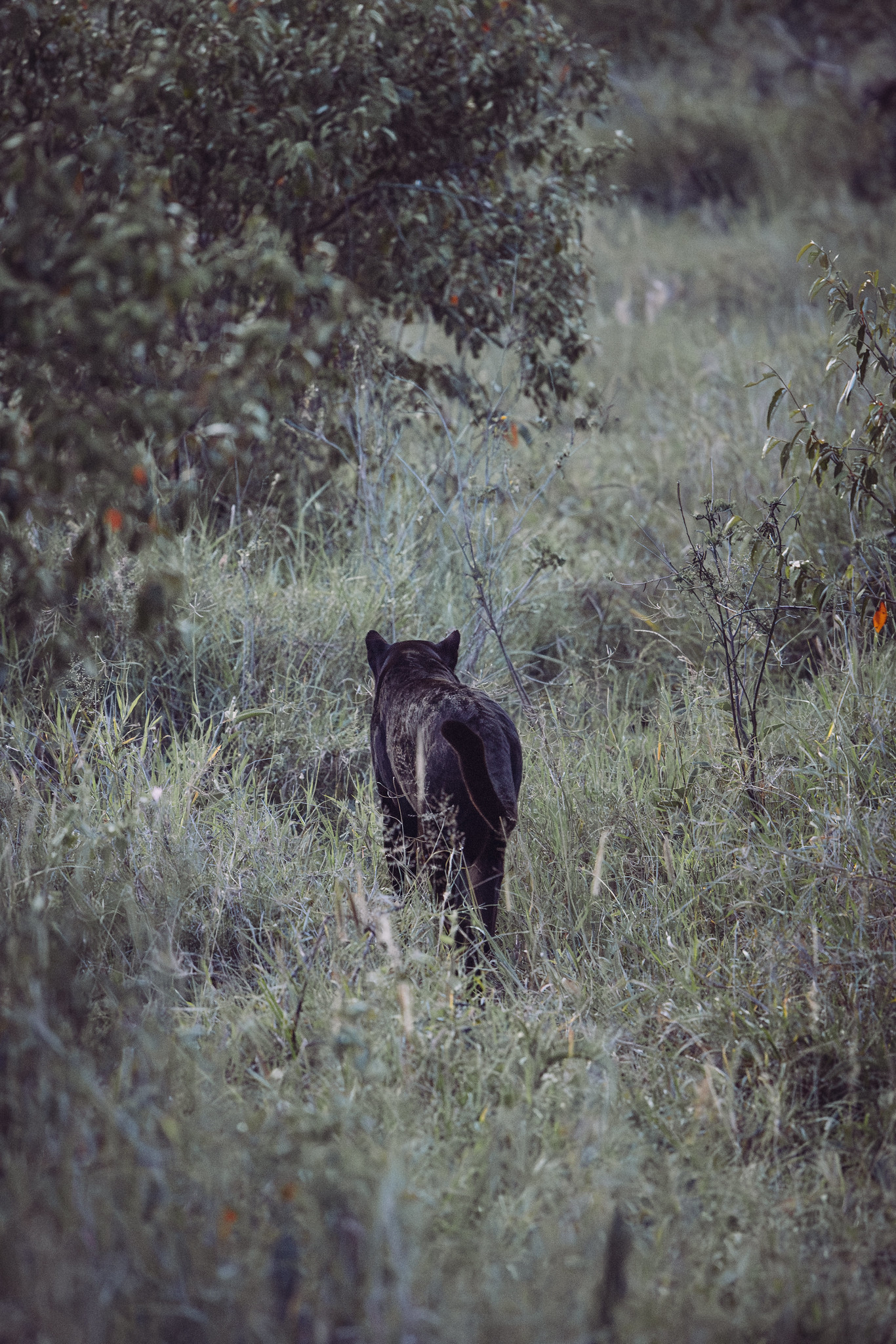
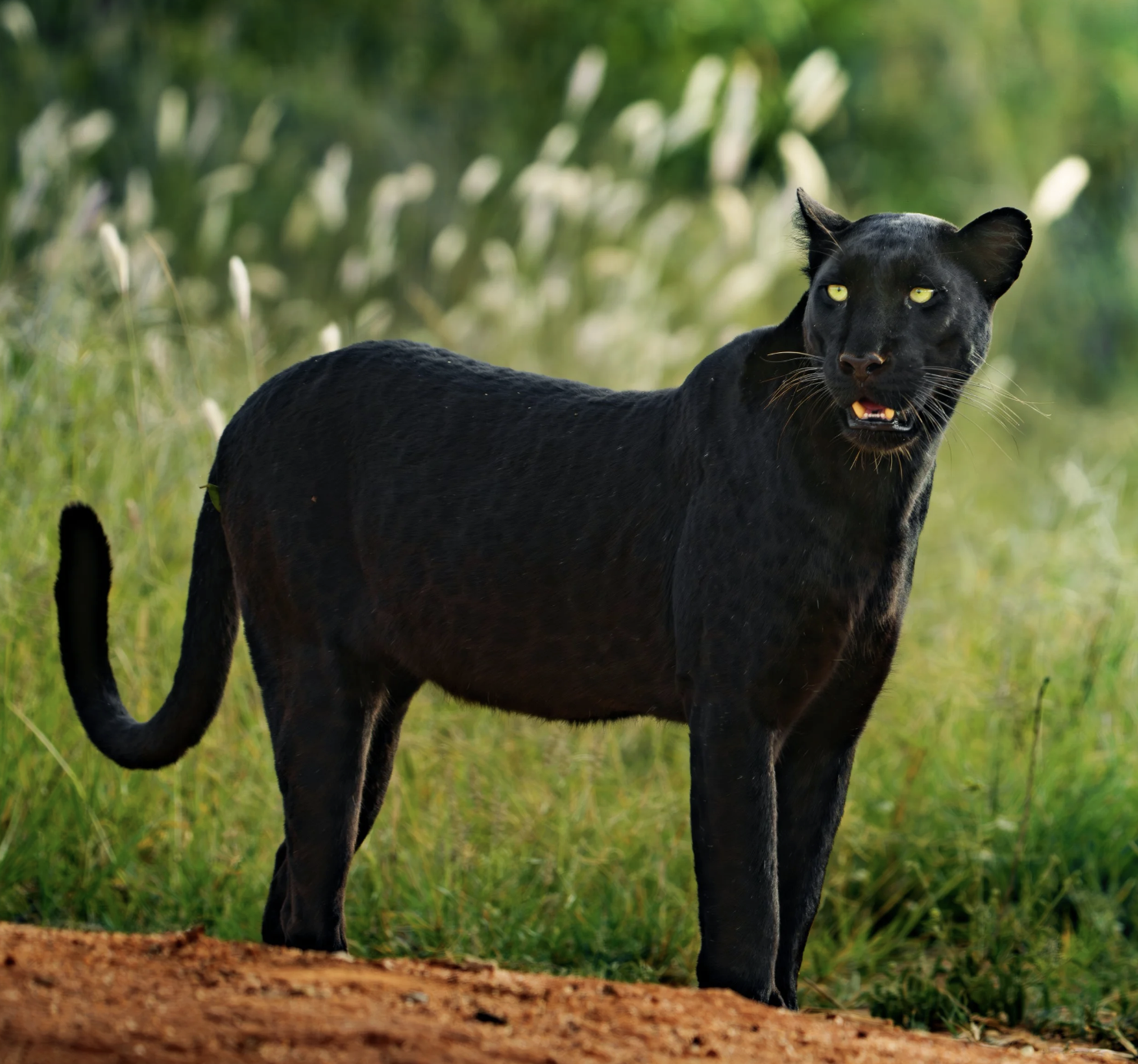
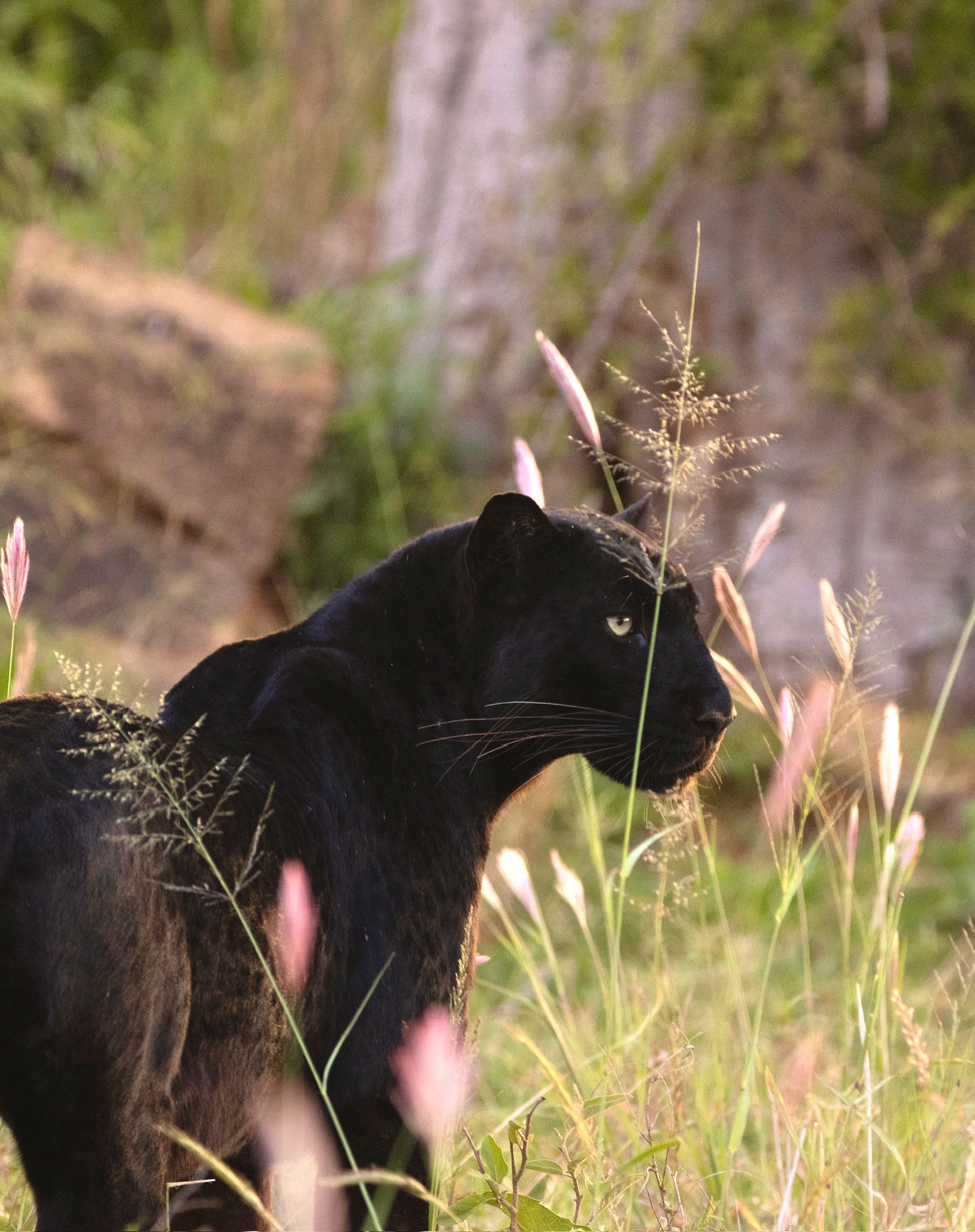
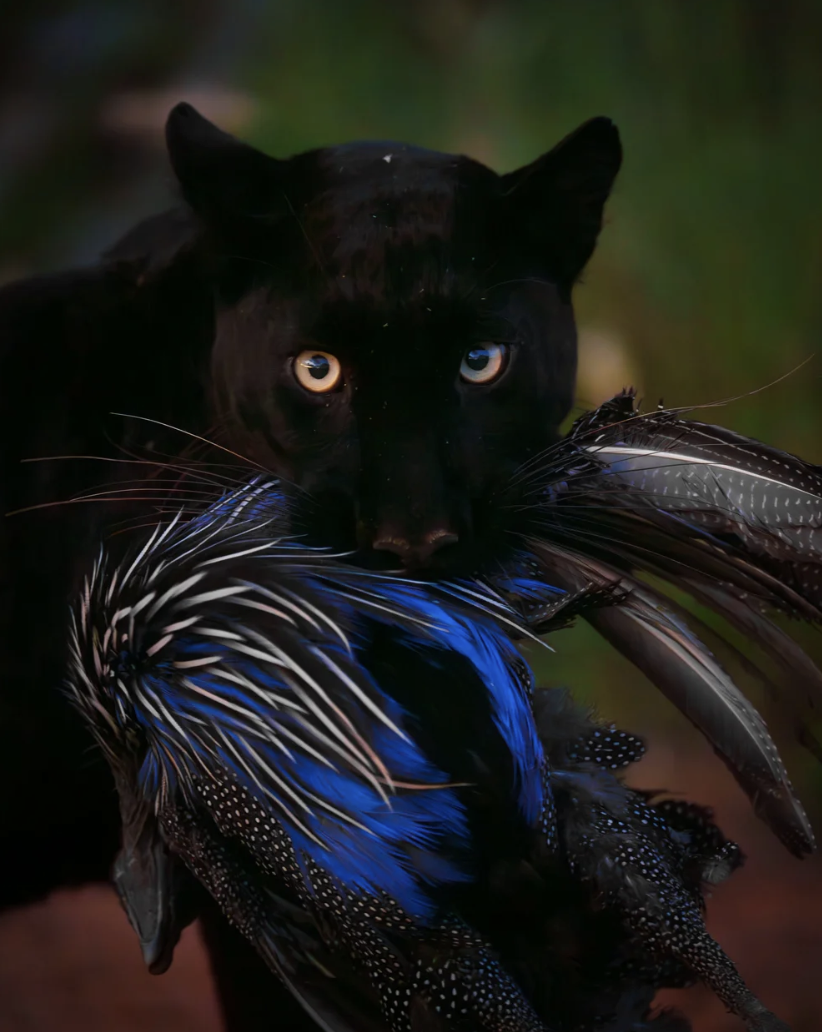
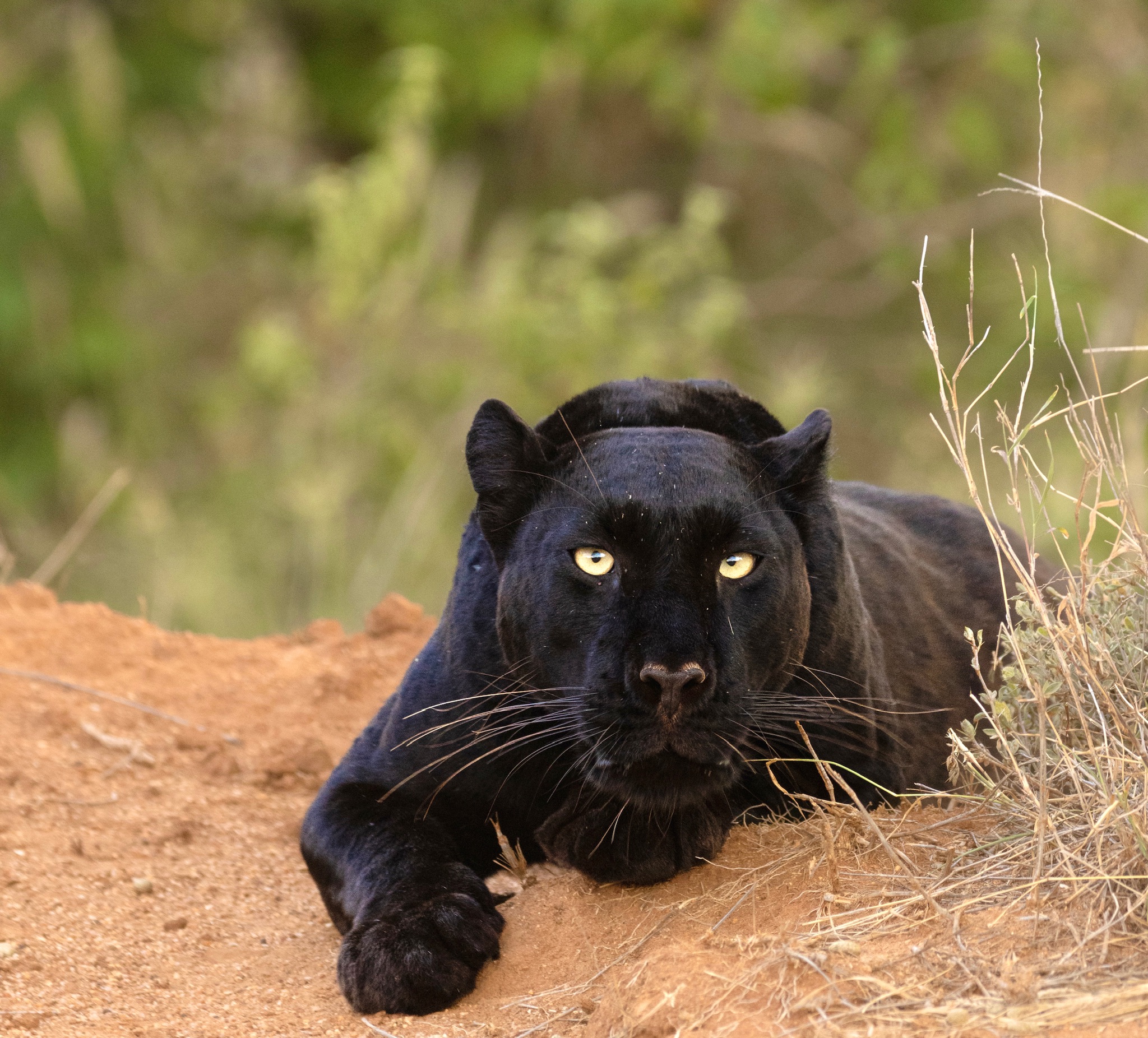
Giza isn’t just a beautiful leopard – she’s one of the rarest animals on Earth. She is a melanistic leopard (often called a “black panther”), born with a genetic variation that produces excess melanin so her coat looks almost completely black, with faint leopard rosettes only visible in the right light. Melanistic leopards are thought to make up only around 11% of the global leopard population, and the vast majority of those live in dense forests in Asia; in African leopards this trait is exceptionally rare.

For most of the last century, black leopards in Africa were treated as rumour, with the first clear scientific camera-trap confirmation in more than 100 years coming from Laikipia in 2019. Laikipia – Giza’s home range around Ol Gaboli – is now recognised as holding the largest known population of black leopards anywhere in Africa, with a small number of individuals identified. Of these, Giza is the most regularly sighted.

Her name  means “darkness” in Swahili, and she has become an icon for this landscape: living proof that Laikipia is one of the only places left where a creature once thought almost mythical still moves freely through the night.
Frequently asked questions about Giza

Answered by William
One of our guides at Ol Gaboli
Who is Giza?

Giza is a wild female black (melanistic) leopard who lives in the Laikipia landscape around Ol Gaboli. She’s become one of Africa’s best-known black leopards because she’s been photographed and filmed more often than almost any other individual, yet she remains entirely wild and free-ranging.

Can you guarantee that I will see Giza?

No – sightings are never guaranteed, and that’s part of the magic. We encourage guests who are travelling especially for Giza to spend a minimum of four nights at Ol Gaboli. Camera traps and long-term research show that these cats are mostly nocturnal, secretive and highly mobile, so even being in the right place doesn’t mean you’ll see her.

How many nights should I stay if I really want a chance to see her?

If a potential Giza sighting is a big part of your dream, we recommend at least 4–6 nights. That gives us time to learn where she’s been moving from fresh tracks, research updates and prey activity – and still lets you enjoy everything else Ol Gaboli and Mpala have to offer if she doesn’t appear.

Do you offer special “black leopard vehicles” or dedicated black leopard safaris?

No. We do not sell special black leopard vehicles or daily black panther safaris. We think that kind of productisation risks putting too much pressure on a single wild animal. Instead:

  • All normal drives are mixed wildlife drives, where Giza is one possibility among many.
  • On rare occasions we may host a specialist, conservation-focused or photographic expedition with agreed protocols – but those are one-off hosted trips, not something we sell every day.
What is your ethical approach to viewing Giza and other predators?

Our guiding principle is simple: Giza’s welfare comes before anyone’s photograph. That means:

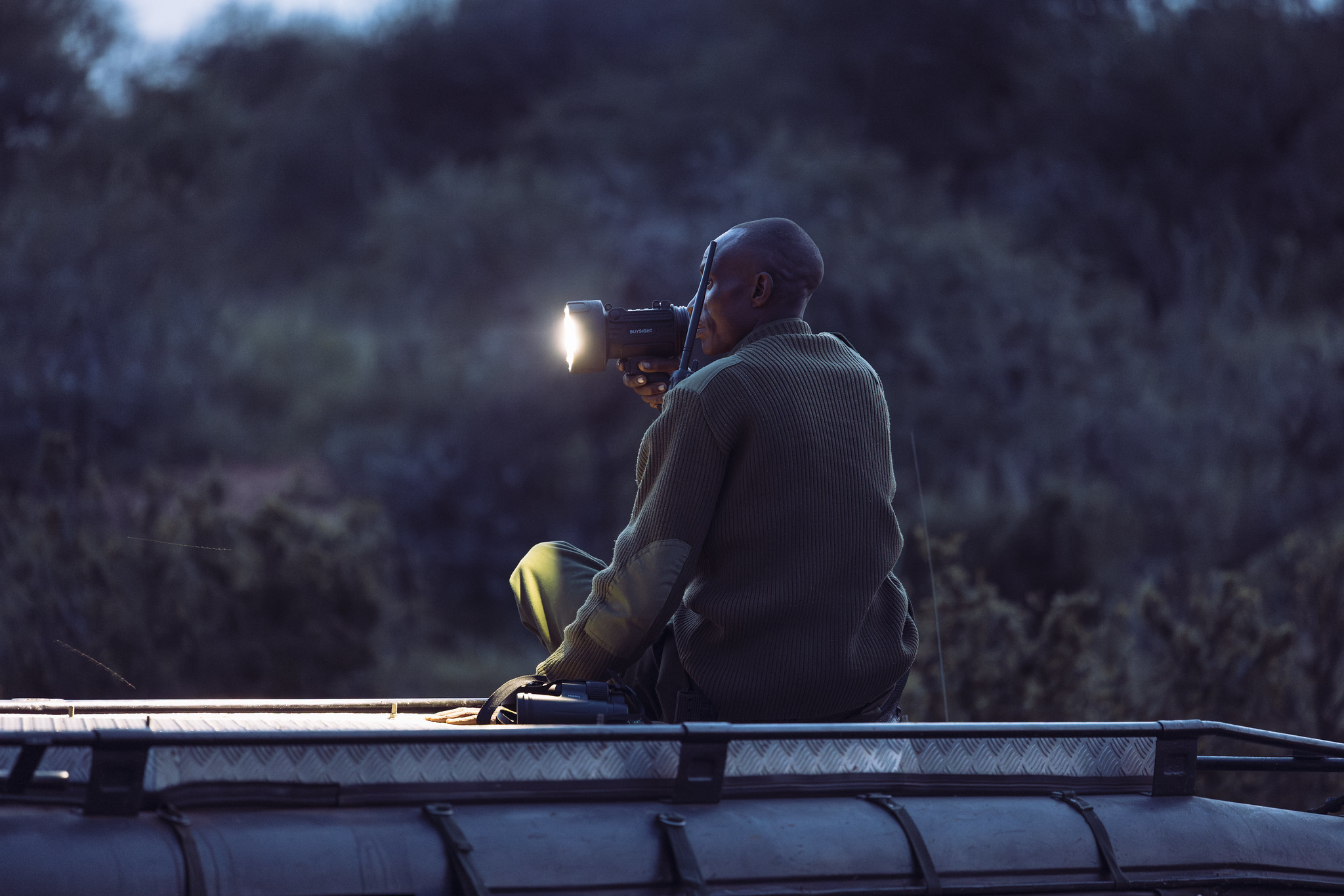
  • Always cary a ranger from Mpala Research Centre with our guests
  • Limited time and vehicle numbers in sensitive areas
  • No off-road driving where it could damage habitat or disturb prey
  • No baiting, no call-ups, no drones, no flash at close range
  • Leaving immediately if she shows any sign of discomfort

We’d rather miss a sighting than push Giza beyond what feels respectful.

How do you get access to the areas where Giza is sometimes seen?

Our access comes through a community-based partnership with Mpala Research Centre. Mpala is a working research landscape, and we are guests there: we only use agreed tracks and viewing areas, we follow researcher guidelines, and we treat Giza first and foremost as a study animal and a wild leopard, not an attraction. We are very proud of this relationship, and look forward to continuing to work with Mpala on a number of community initiatives.

When can guests go into the Giza/Mpala area?

Access is strictly from sunrise to sunset. We do not drive into Mpala’s research areas at night, we do not spotlight Giza, and we do not use bait, calls or any other artificial methods to find her. All sightings are on her terms.

Is it safe to look for Giza?

Yes. You’ll always be with an experienced guide, in a vehicle, following Mpala and conservancy safety rules. Leopards – even black ones – avoid people on foot. Your biggest “risk” is mild sleep deprivation from early starts!

Does Ol Gaboli have good Wi-Fi and power for photographers?

Yes. We run high-speed Starlink Wi-Fi at the lodge and plenty of solar power with battery storage, so photographers can charge camera batteries, laptops, hard drives and phones throughout their stay. You can back up images, send raws to editors or simply gloat on Instagram from the middle of Laikipia.

When is the best time of year to visit for a chance of seeing a black leopard in Laikipia?

Black leopards have been recorded in Laikipia year-round, so there’s no single “season” when they appear and disappear. Dry seasons (roughly July–October and January–March) often give better visibility and access, while green seasons can offer dramatic skies and fewer vehicles. The key is staying long enough and managing expectations.

How many black leopards are there in Laikipia?

Camera-trap and photographic projects centred on Mpala, Loisaba and surrounding conservancies have identified only a small number of melanistic leopards – roughly half a dozen to around ten individuals across the wider landscape. Laikipia likely holds the highest density of black leopards known anywhere in Africa, but they are still exceptionally rare.

What exactly is melanism?

Melanism is a naturally occurring genetic variation where a mutation increases the production of melanin, the dark pigment in skin and hair. In leopards, this turns the coat very dark but doesn’t remove the rosette pattern – under certain light, you can still see Giza’s spots like a ghost pattern in the black.

Are black leopards more endangered than normal leopards?

Black leopards aren’t a separate species; they’re the same African leopard, just with a different colour. Their conservation status is tied to leopard populations as a whole. African leopards are listed as Vulnerable, mainly because of habitat loss, loss of prey and human-wildlife conflict.

How does my stay at Ol Gaboli help black leopard conservation?

By staying with us you’re directly supporting:

  • Community partnerships with Mpala and local women’s groups
  • A model of tourism that values research and low-impact viewing over volume
  • Ongoing leopard and predator work in the wider landscape, through conservation fees and collaboration

The more we can show that careful, community-led tourism has real value, the stronger the case for keeping this landscape wild for Giza and every other creature that lives here.

Why isn’t Giza technically a “black panther”?

“Black panther” isn’t a species – it’s a loose nickname for any big cat in the genus Panthera with a black coat, most often black leopards in Africa/Asia and black jaguars in the Americas. Giza is, scientifically, an African leopard (Panthera pardus pardus) with melanism – a black leopard. Calling her a “black panther” is popular shorthand on social media, but biologically she’s the same species as a “normal” spotted leopard, just with a different colour morph.

How can I book a black leopard safari at Ol Gaboli?

Please contact us on reservations@olgaboli.com